The peacock has long been a symbol of beauty, grace, and elegance in many cultures around the world. Its stunning plumage and regal demeanor have made it a symbol of royalty and nobility. In Hinduism, the peacock is associated with the goddess Saraswati, who is the goddess of wisdom, knowledge, and the arts. In Greek mythology, the peacock is associated with the goddess Hera, who was the queen of the gods and the goddess of marriage and family. In Christianity, the peacock is a symbol of immortality and resurrection, as its molted feathers were believed to regenerate into new, vibrant plumage. The peacock’s symbolism also extends to other cultures, such as in Chinese and Japanese folklore, where it is seen as a symbol of good luck, prosperity, and happiness.
The peacock’s symbolism is also reflected in its use as a decorative motif in art, architecture, and fashion. Its vibrant colors and intricate patterns have been used in textiles, jewelry, and interior design to evoke a sense of luxury and opulence. The peacock’s symbolism has also been used in literature and poetry to convey themes of beauty, pride, and vanity. Overall, the peacock’s symbolism as a symbol of beauty, grace, and elegance has made it a beloved and revered creature in many cultures throughout history.
The Stunning Beauty of the Peacock’s Plumage
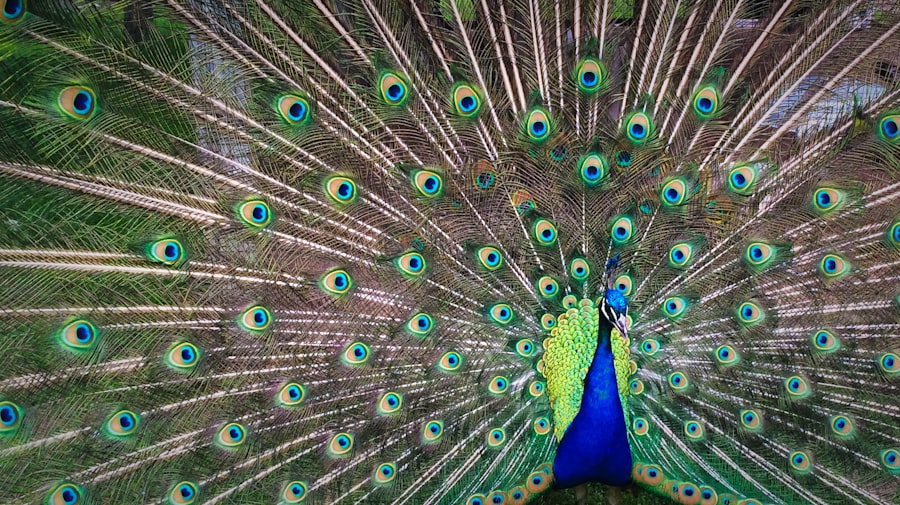
The peacock’s plumage is undoubtedly one of the most stunning displays in the animal kingdom. The male peacock’s tail feathers, or “train,” are adorned with iridescent hues of blue, green, and gold, which shimmer and change color as the bird moves. These vibrant colors are created by microscopic crystal-like structures that reflect light in a way that produces the peacock’s signature iridescence. The female peahen also has beautiful plumage, although it is less extravagant than that of the male. Her feathers are a mixture of brown, gray, and green, providing her with excellent camouflage in her natural habitat.
The peacock’s plumage serves several purposes beyond its aesthetic appeal. The male peacock uses his elaborate display of feathers to attract a mate during courtship rituals. The size and vibrancy of his train are indicators of his genetic fitness and overall health, making it an important factor in mate selection. Additionally, the male peacock will fan out his feathers and perform a dance to further impress potential mates. The peacock’s plumage also serves as a form of protection against predators, as the bright colors can startle or confuse them, giving the bird a chance to escape. Overall, the stunning beauty of the peacock’s plumage is not only a visual spectacle but also serves important functions in the bird’s survival and reproduction.
The Intricate Courtship Rituals of Peacocks
Peacocks are known for their intricate and captivating courtship rituals, which are a sight to behold. During mating season, male peacocks will display their vibrant plumage and perform elaborate dances to attract the attention of female peahens. The male will spread his tail feathers into a fan and vibrate them while shaking his body to create a rustling sound. This display is accompanied by vocalizations such as calls and honks to further entice the female.
The courtship ritual of peacocks is not just for show; it serves an important evolutionary purpose. The female peahen carefully observes the male’s display and evaluates the quality of his feathers, his physical condition, and his overall fitness as a potential mate. The more impressive the male’s display, the more likely he is to attract a mate and pass on his genes to the next generation. This process ensures that only the fittest males are chosen for mating, which helps maintain genetic diversity and overall population health. The intricate courtship rituals of peacocks are not only a spectacle to witness but also play a crucial role in the species’ reproductive success.
The Mystique and Elegance of the Peacock’s Dance
| Aspect | Description |
|---|---|
| Colorful Plumage | The peacock’s dance showcases its vibrant and iridescent feathers, creating a visually stunning display. |
| Rhythmic Movements | The peacock’s dance involves graceful and rhythmic movements, captivating observers with its elegance. |
| Courtship Ritual | The dance is often performed as part of the peacock’s courtship ritual, symbolizing beauty and attraction. |
| Social Significance | The peacock’s dance holds cultural and symbolic significance in various societies, representing grace and allure. |
The dance of the peacock is a mesmerizing display of mystique and elegance that has captivated humans for centuries. When performing their courtship dance, male peacocks spread their vibrant tail feathers into a fan and rhythmically vibrate them while shaking their bodies to create a rustling sound. This dance is accompanied by vocalizations such as calls and honks, creating a multi-sensory experience that is both visually stunning and audibly captivating.
The mystique and elegance of the peacock’s dance have inspired artists, poets, and musicians throughout history. The graceful movements and vibrant colors of the dance have been depicted in paintings, sculptures, and literature as symbols of beauty, grace, and romance. The dance has also been used as a metaphor for courtship and love in various cultural traditions. In Indian classical dance, for example, there are movements inspired by the peacock’s dance that symbolize love and devotion. Overall, the mystique and elegance of the peacock’s dance have left an indelible mark on human culture and continue to inspire awe and admiration.
The Role of Peacocks in Mythology and Folklore
Peacocks have played significant roles in mythology and folklore across various cultures around the world. In Hindu mythology, the peacock is associated with Kartikeya, the god of war, who is often depicted riding on a peacock. The bird is also associated with Saraswati, the goddess of wisdom and knowledge, who is often depicted with a peacock as her vehicle. In Greek mythology, the peacock is associated with Hera, the queen of the gods, who was said to have adorned her chariot with peacock feathers.
In Christianity, the peacock has been used as a symbol of immortality and resurrection due to the belief that its molted feathers regenerate into new plumage. In Chinese and Japanese folklore, the peacock is seen as a symbol of good luck, prosperity, and happiness. In many cultures, the peacock’s vibrant plumage has been associated with royalty, nobility, and beauty. Overall, the role of peacocks in mythology and folklore reflects their status as symbols of beauty, grace, and elegance in human culture.
The Conservation Efforts to Protect Peacock Populations
Peacocks are facing various threats to their populations, including habitat loss, poaching for their feathers and meat, and illegal pet trade. As a result, conservation efforts are crucial to protect these majestic birds and ensure their survival for future generations. Many organizations around the world are working to conserve peacock populations through habitat protection, anti-poaching measures, public awareness campaigns, and captive breeding programs.
Habitat protection is essential for preserving peacock populations as it ensures that they have access to suitable nesting sites, food sources, and safe breeding grounds. Anti-poaching measures are also crucial for preventing illegal hunting and trade of peacocks for their feathers or meat. Public awareness campaigns help educate local communities about the importance of conserving peacocks and their habitats. Captive breeding programs play a vital role in maintaining genetic diversity and providing a safety net for populations at risk.
Overall, conservation efforts to protect peacock populations are essential for ensuring that these majestic birds continue to thrive in the wild. By addressing threats such as habitat loss, poaching, and illegal trade, we can help secure a future for peacocks and preserve their beauty for generations to come.
The Captivating Presence of Peacocks in Art and Culture
Peacocks have long been celebrated for their captivating presence in art and culture around the world. Their stunning plumage and graceful demeanor have inspired artists, poets, musicians, and designers for centuries. In visual arts, peacocks have been depicted in paintings, sculptures, textiles, and decorative arts as symbols of beauty, grace, and elegance. Their vibrant colors and intricate patterns have been used to evoke a sense of luxury and opulence in various art forms.
In literature and poetry, peacocks have been used as metaphors for beauty, pride, and romance. Their courtship rituals and graceful movements have been celebrated as symbols of love and devotion in many cultural traditions. In music and dance, the mystique and elegance of the peacock’s presence have been expressed through choreography, compositions, and performances that capture its allure.
In fashion and design, peacocks have been used as decorative motifs in textiles, jewelry, accessories, and interior design to convey a sense of opulence and sophistication. Their vibrant plumage has been incorporated into clothing and accessories to add a touch of glamour and extravagance.
Overall, the captivating presence of peacocks in art and culture reflects their status as symbols of beauty, grace, and elegance that continue to inspire creativity and admiration across diverse cultural traditions.
In conclusion, the symbolism of the majestic peacock extends beyond its stunning beauty to encompass its intricate courtship rituals, mystique dance performances, rich mythology and folklore associations across cultures worldwide. Conservation efforts are crucial to protect these magnificent birds from threats such as habitat loss or poaching while their captivating presence continues to inspire artistry across various forms of human expression.
I recently had a dream about a peacock, and it left me wondering about its significance. After doing some research, I came across an interesting article on the Galtal Almog website about dream interpretation and the symbolism of animals in dreams. The article provided some fascinating insights into the potential meanings behind seeing a peacock in a dream. It was really helpful in understanding the deeper message my subconscious might be trying to convey. If you’re curious about dream interpretation, I highly recommend checking out this article for some valuable insights.
FAQs
What does it mean to dream about a peacock?
Dreaming about a peacock can symbolize beauty, pride, and confidence. It may also represent new opportunities and growth in various aspects of your life.
What does the color of the peacock in the dream signify?
The color of the peacock in the dream can hold significance. For example, a white peacock may symbolize purity and spirituality, while a blue peacock may represent calmness and tranquility.
What does it mean to see a peacock spreading its feathers in a dream?
Seeing a peacock spreading its feathers in a dream can symbolize a display of confidence, pride, and self-expression. It may also indicate a desire to stand out and be noticed.
Are there any negative interpretations of dreaming about a peacock?
While dreaming about a peacock is generally considered positive, some interpretations suggest that it may also symbolize vanity or arrogance. It’s important to consider the context of the dream and your emotions during the dream for a more accurate interpretation.
Can dreaming about a peacock have cultural or religious significance?
In some cultures, the peacock is associated with immortality, royalty, and spirituality. In Hinduism, the peacock is linked to the goddess Saraswati and is considered a symbol of benevolence and patience. In Christianity, the peacock is often associated with resurrection and eternal life.
Should I pay attention to my dreams about peacocks?
Dreams about peacocks can offer insight into your emotions, desires, and subconscious thoughts. While they may not have a direct impact on your waking life, paying attention to these dreams can provide valuable self-reflection and understanding.